Water management solutions for Data Centres

Optimise water consumption, protect cooling systems and prepare your data centre for sustainable growth with a water management strategy tailored to your needs.

Increasing IT equipment power density and evolving cooling technologies are creating new challenges for water management in data centres. Water efficiency, measured using the Water Usage Effectiveness (WUE) indicator, is closely linked to cooling strategies and water treatment. Effective water quality management helps control scaling, corrosion and biological fouling, which can affect system performance and reliability.

A Water Strategy Tailored to Each Data Centre

Make-up water quality, cooling technology and operating conditions determine the most appropriate treatment and water recovery strategies. Optimising Cycles of Concentration (CoC) and assessing the use of alternative water sources, such as reclaimed water, can reduce demand for conventional water supplies, provided the relevant water quality and operational requirements are met.

Veolia combines make-up water treatment technologies, chemical treatment, MLD/ZLD recovery systems and real-time digital monitoring. This integrated approach optimises water footprint, strengthens operational resilience and helps data centres meet sustainability reporting and water performance indicator requirements set out in the European Energy Efficiency Directive (EED) and Commission Delegated Regulation (EU) 2024/1364 for facilities with an IT power demand of 500 kW or more.

  • PretreatmentIcon (1)
    Water Reuse
  • ServicesIcon
    Optimisation
  • Tailored solutions
    Tailored Solutions

Why choose Veolia? 

Delivering resilient digital infrastructure requires integrated power, heat recovery, water and resource management. Veolia supports the data centre ecosystem with solutions that improve operational resilience, optimise performance and prepare infrastructure for future growth.

Through Veolia Group's Data Centre Resource 360 approach, we help customers achieve:

350 MW

of off-grid microgrid generation for a site

≤20%

energy reuse efficiency enhancement

≤75%

water footprint reduction

≤95%

waste recycling and reuse


Frequently asked questions about water management in Data Centres


What is data centre WUE and why is it so important?

Water Usage Effectiveness (WUE) is the indicator defined in ISO/IEC 30134-9 that measures a data centre’s water consumption in relation to the energy used by its IT equipment. It is expressed in litres per kilowatt-hour (L/kWh).

A lower WUE indicates more efficient water use. In the European Union, the average reported WUE was 0.58 L/kWh in 2024. This indicator is important because regulatory frameworks such as the European Energy Efficiency Directive (EED) require facilities with an IT power demand of 500 kW or more to record and report their water consumption transparently.

How can water consumption in cooling systems be reduced?

Reducing water consumption requires optimising cooling system operation and tailoring water treatment to the needs of each facility. Key measures include:

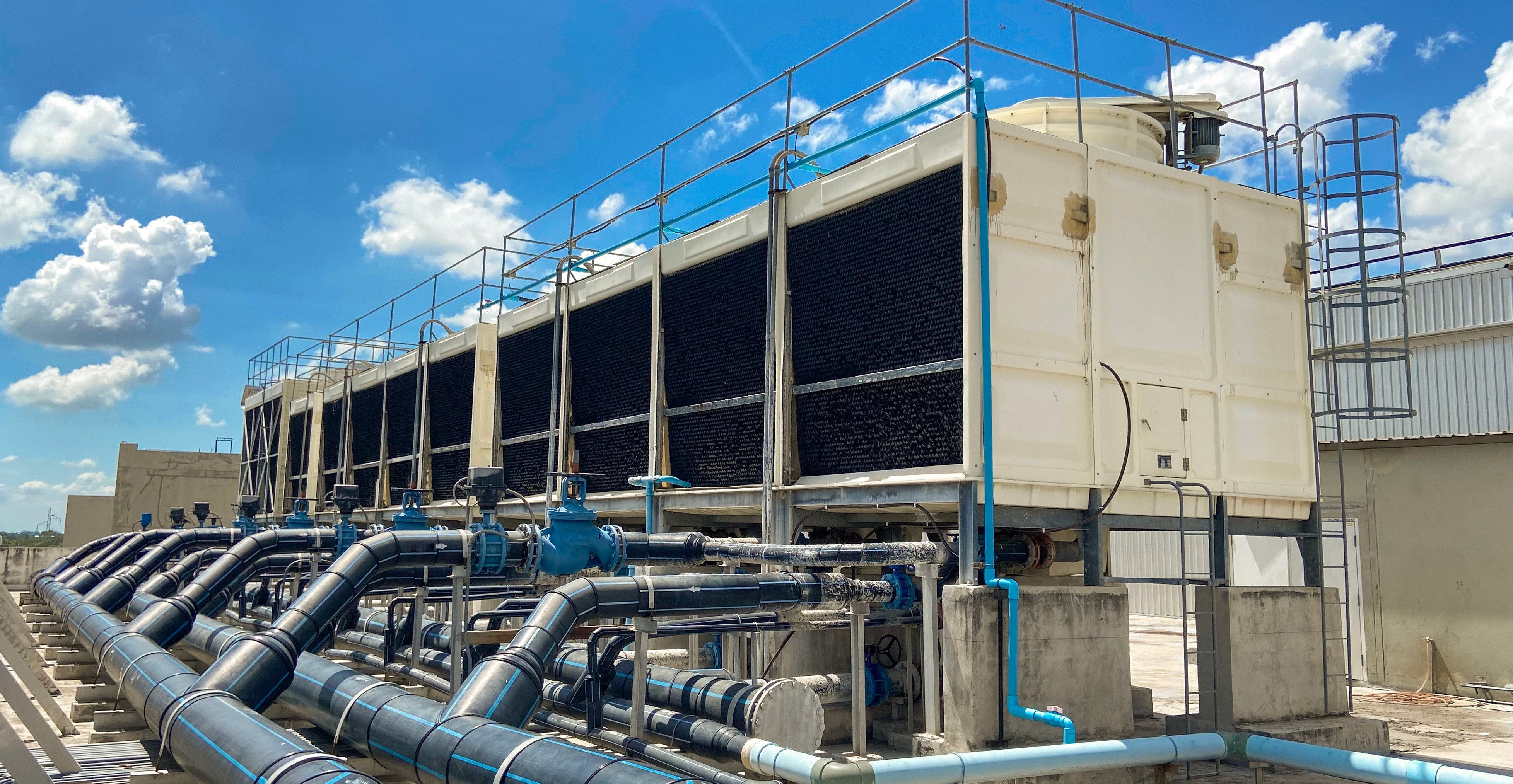
  • Optimising Cycles of Concentration (CoC): Increasing the number of times water can be recirculated in cooling towers before being discharged helps reduce make-up water consumption and blowdown volumes, provided water quality and operating conditions allow it.
  • Improving water treatment: Softening, filtration and other specialised treatments help control scaling and salt accumulation, supporting more efficient operation.
  • Recovering and reusing water: Water recovery technologies and Minimum Liquid Discharge (MLD) or Zero Liquid Discharge (ZLD) systems enable certain wastewater streams to be reused and reduce the volume of water discharged. The use of reclaimed water as an alternative to potable water can also be assessed.
What operational risks can inadequate cooling water treatment cause?

Poor water quality control can compromise the efficiency, reliability and availability of cooling systems. The main risks include:

  1. Scaling: Mineral deposits on heat transfer surfaces reduce heat transfer efficiency and can increase energy consumption.
  2. Corrosion: Inappropriate water chemistry can damage pipes, heat exchangers and other components, leading to leaks, equipment failures and unplanned downtime.
  3. Biofilms and microbial growth: Microorganisms can reduce equipment efficiency and, in certain systems, increase health risks associated with bacteria such as Legionella.

An appropriate water treatment and monitoring programme helps control these risks and maintain system performance.

Can reclaimed, borehole or treated wastewater be used for data centre cooling?

Yes. Using alternative water sources can reduce reliance on potable water and improve water resource management. Feasibility depends on the quality of the available water, cooling system requirements and applicable discharge regulations.

Depending on the water characteristics, treatment may require a combination of technologies such as ultrafiltration (UF), reverse osmosis (RO), disinfection and chemical conditioning. Treatment selection should be tailored to each facility to control scaling, corrosion and microbial growth, ensuring appropriate operating conditions.

What requirements does European legislation set for water use in data centres?

The Energy Efficiency Directive (EU) 2023/1791 and Commission Delegated Regulation (EU) 2024/1364 establish a framework for monitoring and reporting sustainability indicators for data centres with an installed IT power demand of 500 kW or more.

The information covered includes water consumption and the WUE indicator, alongside other parameters relating to energy efficiency and the environmental impact of facilities. Operators must submit the required information through the applicable reporting mechanism. Public information in the European database is presented in aggregated form, subject to the confidentiality safeguards established by the legislation.

Veolia’s water treatment, reuse and monitoring solutions can help operators improve consumption tracking, optimise cooling systems and access the information needed to assess water performance.