How it works
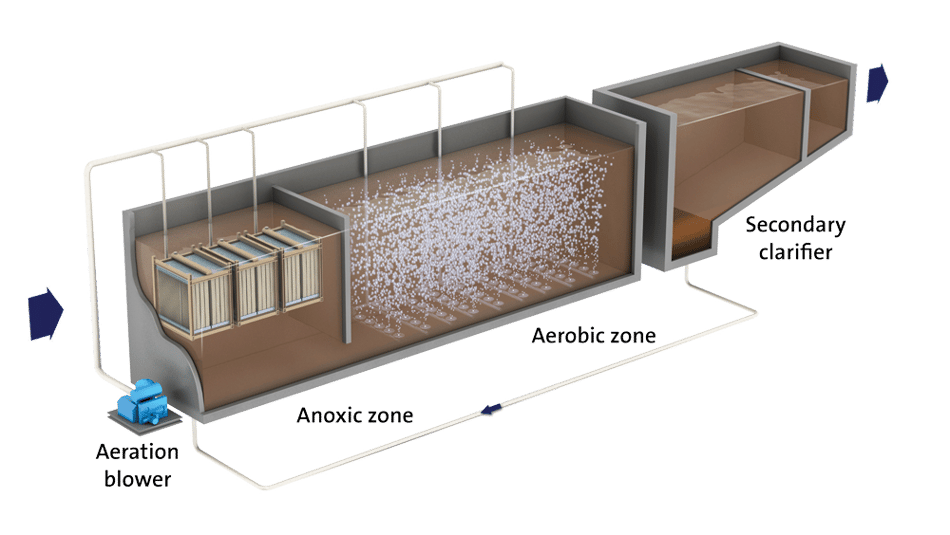
This technology combination couples the synergies of intensified biological nutrient removal with continuous flow densification:
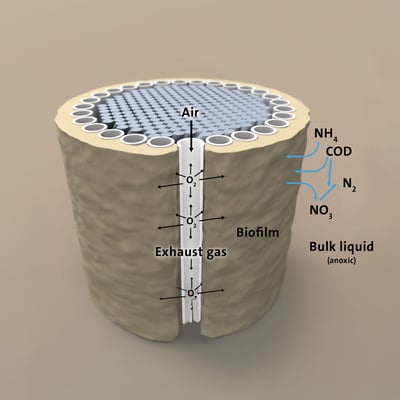
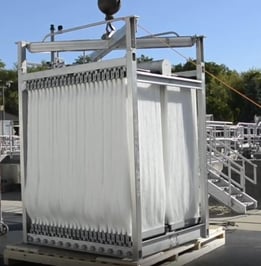 In the bioreactor: ZeeLung cassettes are simply immersed in the mixed liquor. They support the growth of a biofilm that increases the inventory of nutrient-removing biomass in the system. The ZeeLung media “breathes” – transferring oxygen to the biofilm without the use of bubbles, which reduces aeration energy by up to 75% and mitigates N₂O emissions. With ZeeLung, facilities can achieve up to 50% more biological treatment capacity within the same tank volume.
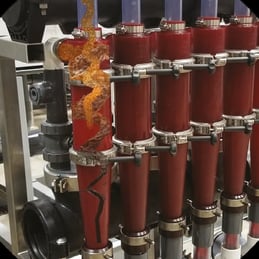 In the sludge stream: zeeDENSE racks process the waste-activated sludge or mixed liquor using hydrocyclones to create continuous gravimetric selection pressure. The system actively separates biomass:
✅ the dense highly active fraction is returned to the bioreactor
✅ The lighter, slower-settling fraction is wasted from the process
The result is improved settling characteristics of the mixed liquor, which enables up to 50% intensification of secondary clarification.